

Nobody knows exactly where the breaking point is, but we are getting closer to finding out. The 10 year Treasury ended the week around 4.7%, while the 30 year pushed above 5.3%. Washington intervened with larger Treasury buybacks, yields briefly fell, and then the selling resumed. So much for throwing a match to try and dry up the ocean of free market bond trading that takes place globally.

For years, markets have asked how high interest rates can go before something breaks. I think that question is about to change. The question now is how high Treasury yields can go before Washington decides they are no longer allowed to go higher. My guess, for the 10-year, is that the number begins with a six.
I have been warning non-stop for many years that math doesn’t cease to exist because Christine Lagarde wears fancy spectacles.

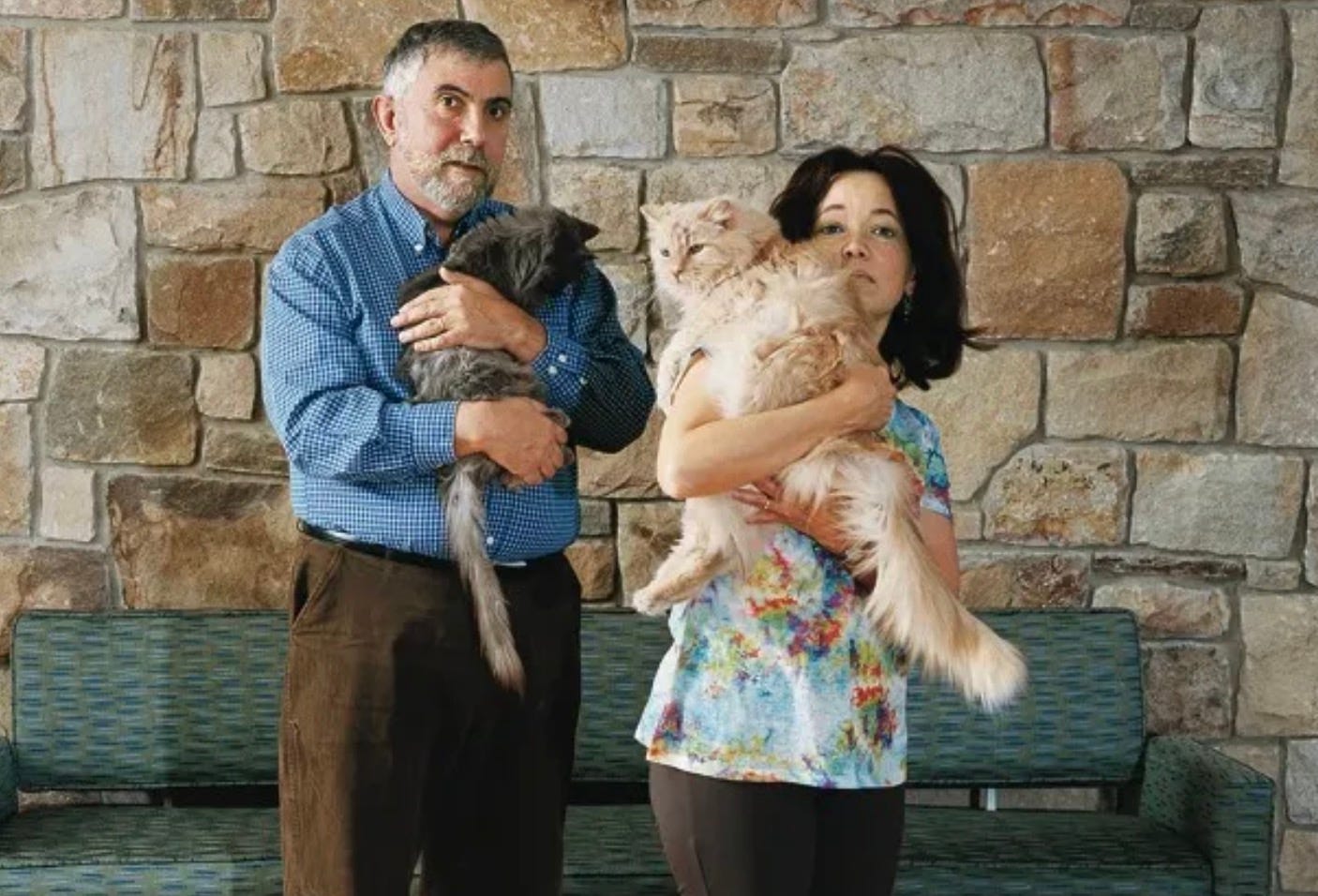
Nor does math cease to exist every time Paul Krugman gets another cat.
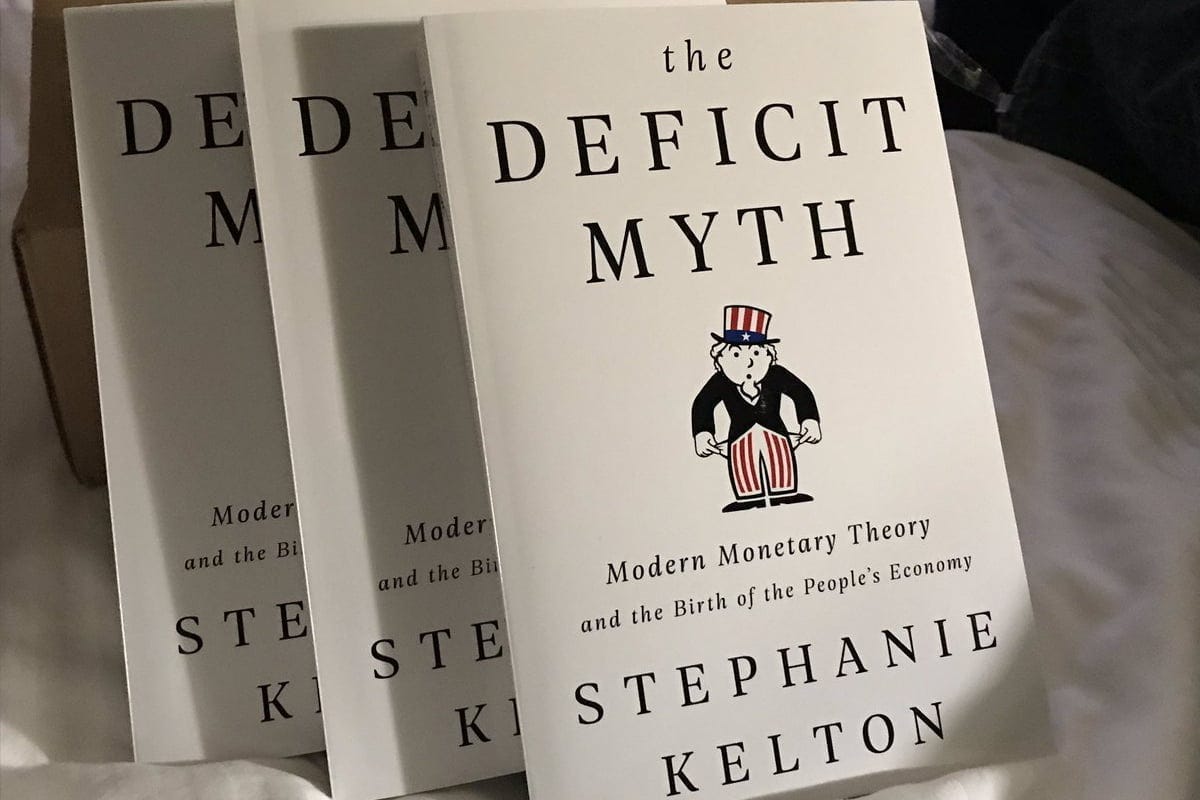
Nor does math cease to exist every time Stephanie Kelton writes about a book about why deficits and debt are figments of our imagination.
Boring old reason and common sense have continued to suggest that eventually the sheer size of the debt and deficits would collide with the bond market. For a long time, that warning was easy to dismiss. Deficits did not matter until they did. Debt did not matter because there was always another buyer. The Treasury market could absorb anything Washington threw at it because, well, it always had before.
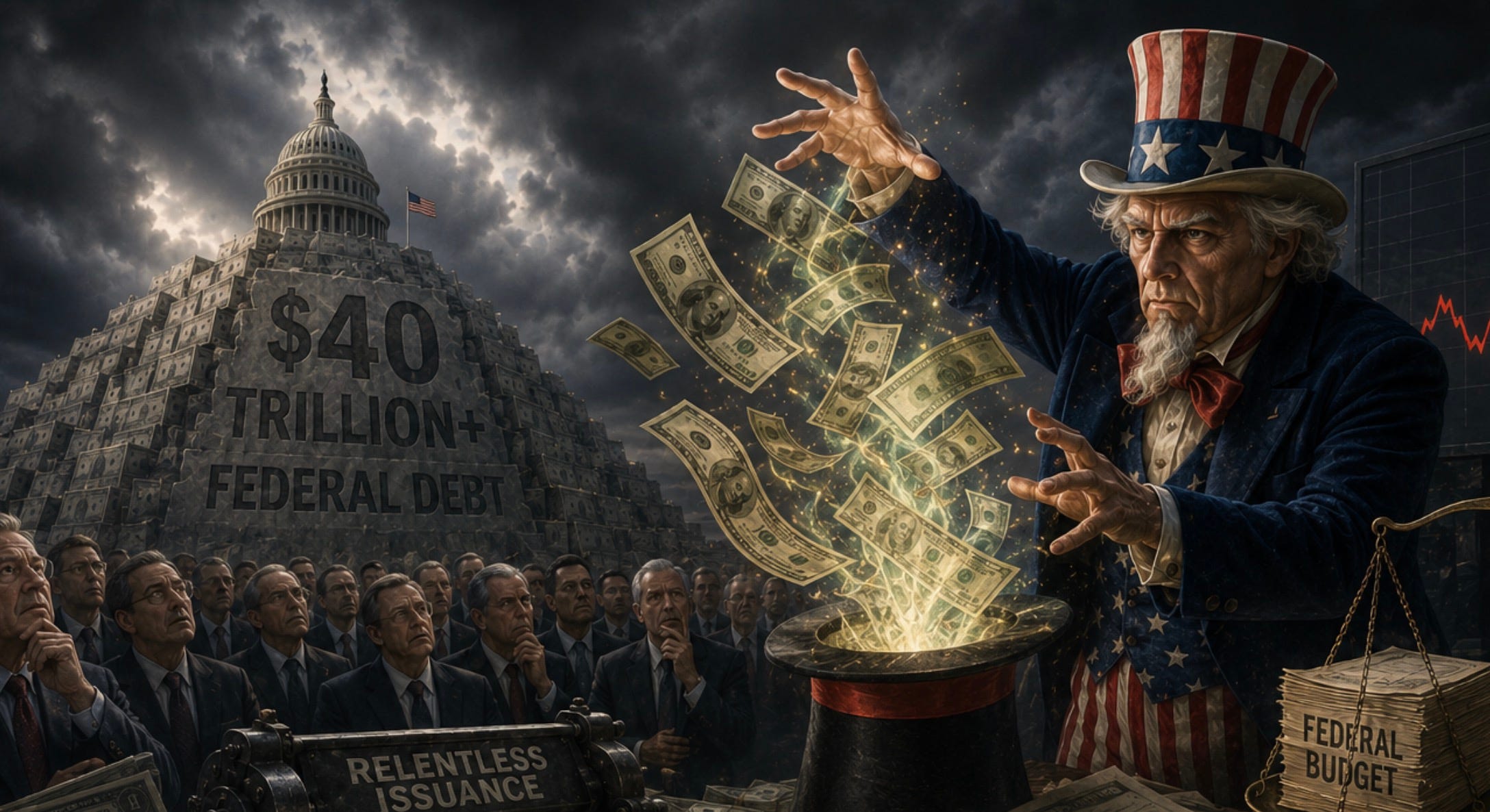
Now federal debt is above $40 trillion, interest expense is enormous, Treasury issuance is relentless and the marginal buyer is starting to ask for more compensation. Apparently the free market has developed the annoying habit of wanting to be paid more for lending money to an entity that believes, kid’s fairy tale style, that dollars can be conjured up out of thin air using alchemy any time they are needed. The nerve!
A 6% 10 year would be more than another 100 or 125 basis points of tightening.
Markets have adapted surprisingly well to yields between 4% and 5%. At 6%, the arithmetic gets considerably uglier. Mortgage rates move higher, housing affordability deteriorates further, corporate refinancing gets more expensive, equity multiples face another compression and, most importantly, the federal government’s interest burden accelerates.
The problem is that the forces pushing yields higher are increasingly outside the Fed’s direct control. The bond market is pricing enormous deficits, relentless issuance, higher energy prices, rising corporate borrowing and a larger term premium. At the same time, some of the world’s traditional sources of demand for Treasuries are becoming less dependable.
Japan is an important part of that story. Japanese government bond yields have risen to levels not seen in decades, giving one of the world’s largest pools of savings an increasingly attractive alternative at home. The sovereign bond selloff is global, which means governments everywhere are competing for capital just as they all seem to have discovered an insatiable appetite for borrowing it.
Energy is making the problem worse. Oil has surged as tensions with Iran have increased, while refined products, particularly diesel, have moved even more aggressively. That feeds directly into transportation, agriculture, manufacturing and consumer prices. It creates exactly the combination the Fed does not want: weaker growth alongside renewed inflation pressure.
The consumer is beginning to feel it, too. Just ask companies that are in the business of offering people 30 year mortgages to buy a Domino’s Pizza. They are lending more and taking on new customers faster than ever. I think this means two things: 1) massive defaults are not going to be far behind and 2) the American consumer absolutely cannot afford higher interest rates from this point.

This is where the path toward 6% becomes dangerous. Higher Treasury yields increase federal interest expense. Higher interest expense increases deficits. Larger deficits require more Treasury issuance. More issuance forces investors to absorb more duration, which can require an even higher yield. For those of us that would rather watch Steve Irwin than Steve Liesman, it means the snake begins eating its own tail.
And no, the United States does not need to refinance $40 trillion at 6% tomorrow morning for this to become a problem. Markets price assets at the margin. Once investors begin believing that something around 6% is becoming the marginal cost of long term financing for the U.S. government, nearly every other asset has to reprice around it.
This week may have given us an early preview of what happens next. Treasury increased the size of its longer dated bond buybacks as yields surged. The announcement initially calmed the market.
Then, as I predicted would happen, the rally faded and yields started climbing again. That is the part worth remembering.
Buybacks can improve liquidity. Treasury can alter the maturity composition of issuance. Officials can hold press conferences, change spectacles, rearrange the deck chairs and explain that everything is functioning normally. None of those things solves the problem. They can change the composition of the debt, but they cannot manufacture unlimited structural demand for it.
But, my dear friends, the Federal Reserve can. And this is where the free market enthusiasts, especially those long gold and silver, could have some fun.
We are about to find out how committed policymakers really are to letting markets determine prices when the price in question is the borrowing cost of the United States government. My suspicion is: not very.
Anyone who convinced themselves that monetary policy would somehow be fundamentally different under this political regime may be in for an unpleasant surprise. When the bond market is cooperative, everyone can talk about discipline, independence and sound money. When the 10 year is screaming toward 6%, mortgages are getting crushed, equities are repricing and federal interest expense is exploding, those principles are likely to become considerably more flexible.
Central bankers always seem to love markets…right up until markets produce the “wrong” price (hereinafter referred to as the actual free market price).
A 10 year approaching 6% fundamentally changes the policy debate. The question stops being whether the Fed cuts 25 or 50 basis points. It becomes how the Fed prevents the long end from tightening financial conditions regardless of what it does with overnight rates.
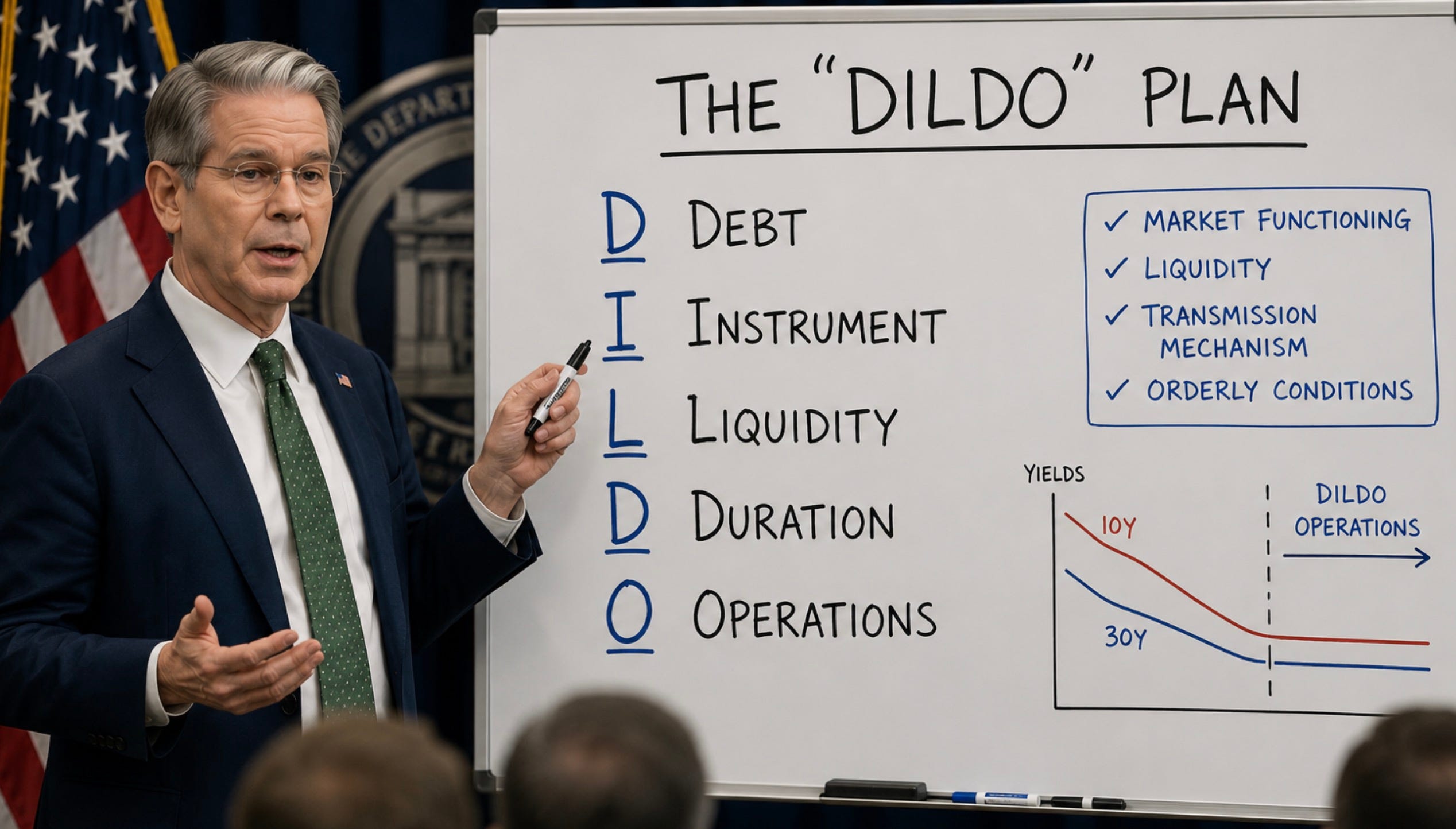
The first response would probably be dressed up in familiar language. The Fed could restart quantitative easing and purchase longer dated Treasuries. Nobody would call it yield curve control at first, of course. There would be talk about market functioning, liquidity, transmission mechanisms and restoring orderly conditions. Central banking has an impressive vocabulary for buying bonds when buying bonds becomes politically inconvenient to describe.
They’d call it something innocuous. It’s not QE…it’s the DILDO plan: Debt Instrument Liquidity and Duration Operations.
But if yields continued rising, the destination would become increasingly obvious. Under quantitative easing, the Fed determines how many bonds it wants to buy and lets the market determine the resulting yield. Under yield curve control, the Fed determines the yield it is willing to tolerate and buys whatever quantity is necessary to defend it. At that point, price discovery becomes a quaint historical concept.
There is precedent for this. During and after World War II, the Fed capped Treasury yields to help the government finance enormous deficits. It worked. Of course it worked. If an institution capable of creating unlimited dollars promises to buy a bond above a certain price, arguing with it is not a particularly attractive trade.
The problem comes afterward. Suppressing the government’s borrowing cost does not eliminate the underlying fiscal imbalance. It merely relocates the adjustment. Instead of occurring through nominal interest rates, it can occur through inflation, currency weakness, negative real rates and higher prices for scarce assets.
Imagine the 10 year approaching 6% while oil remains elevated and inflation is still above target. Keeping policy tight could intensify the Treasury selloff. Cutting aggressively could weaken the dollar and push inflation expectations higher. Allowing yields to keep climbing could crush housing, credit and equity valuations. Buying enough Treasuries to stop the move would raise the uncomfortable question of whether monetary policy had become subordinate to fiscal policy.
There is no clean option, which is exactly why I expect the supposedly unthinkable option to become thinkable very quickly.
One of the more interesting signals this week was that the dollar weakened even as Treasury yields rose. Normally higher U.S. yields attract foreign capital and support the dollar. When yields rise while the currency falls, the message can be considerably less flattering. Investors may not be celebrating American growth. They may simply be demanding more compensation to finance America.
Gold and Bitcoin appear to have noticed. Both surged while Treasuries sold off. Investors facing uncertainty were not simply fleeing toward government bonds. Some capital moved toward scarce assets outside the sovereign liability structure instead.
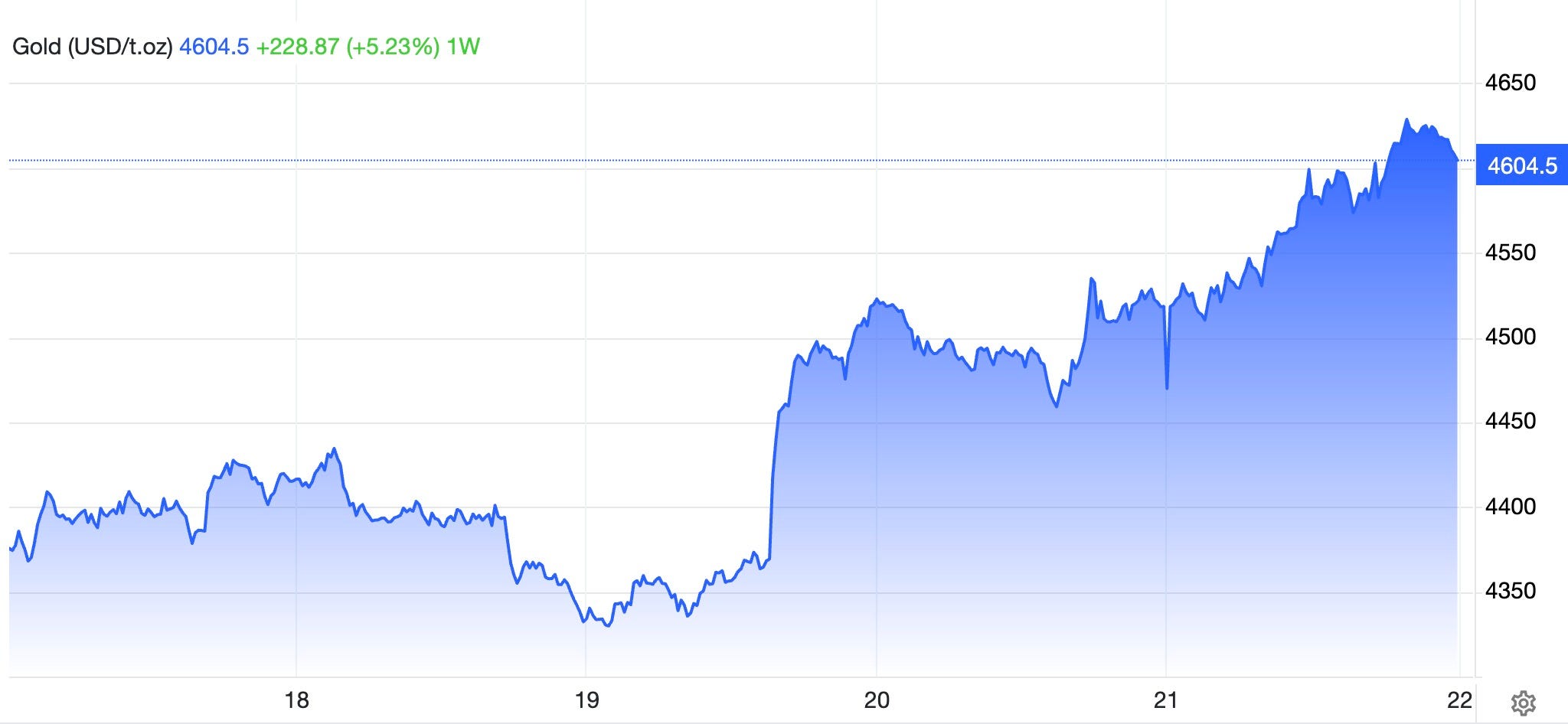
That is worth paying attention to because yield curve control would pour fuel on precisely that trade. YCC does not solve the government’s financing problem. It changes who absorbs it. Instead of allowing Treasury yields to rise until private investors willingly finance the deficit, the central bank suppresses those yields and forces the adjustment somewhere else.
Maybe it shows up in inflation. Maybe it shows up in the dollar. Maybe it shows up in gold, Bitcoin and other scarce assets. Most likely it shows up in some combination of all three.
Nobody knows exactly where Washington’s pain threshold sits. It could be 5.5%. It could be 6%. The market could blow straight through 6% before policymakers panic. The exact number matters less than the reaction function.
What we learned this week is that Washington is already paying attention. The 30 year crossed 5.3%, Treasury responded, the market rallied and then investors started selling bonds again.
If yields keep climbing, we are going to learn whether all the fashionable talk about fiscal discipline, central bank independence and letting markets work survives contact with an actual bond market revolt. I have my doubts.
Somewhere between today’s 4.7% 10 year and a 6% 10 year lies the point where higher yields stop being treated as useful price discovery and start being described as disorderly market conditions. That linguistic transition will tell you almost everything you need to know about what comes next.
Treasury can buy time, alter issuance and improve market plumbing. Ultimately, though, there is only one institution capable of creating unlimited demand for U.S. government debt.
If we get to 6%, the most important question in markets will no longer be whether the Fed cuts rates. It will be how long the free market is ever allowed to keep setting the price.
Read more: 40 Trillion Reasons To Own Gold
Read more: The Real AI Crash Will Start This Year
Read more: Private Credit’s Problems Just Got Real
Read more: 6 Market Shocks I Predict If Democrats Win Midterms

QTR’s Disclaimer: Please read my full legal disclaimer on my About page here. This post represents my opinions only. In addition, please understand I am an idiot and often get things wrong and lose money. I may own or transact in any names mentioned in this piece at any time without warning. Contributor posts and aggregated posts have been hand selected by me, have not been fact checked and are the opinions of their authors. They are either submitted to QTR by their author, reprinted under a Creative Commons license with my best effort to uphold what the license asks, or with the permission of the author. I cannot guarantee the accuracy of all facts and figures included in this article though I made my best effort to get them right. I have been wrong before and will be wrong again, and encourage you to always double check, do your own research and speak to a licensed financial professional.
This is not a recommendation to buy or sell any stocks or securities, just my opinions. I often lose money on positions I trade/invest in. I may add any name mentioned in this article and sell any name mentioned in this piece at any time, without further warning. None of this is a solicitation to buy or sell securities. I may or may not own names I write about and are watching. Sometimes I’m bullish without owning things, sometimes I’m bearish and do own things. Just assume my positions could be exactly the opposite of what you think they are just in case. If I’m long I could quickly be short and vice versa. I won’t update my positions.
As of May 20, 2026 I am attempting to no longer actively trade as much as I once did (read my story here). My eventual goal is for investing/saving to be mostly done by recurring contributions mostly to sector ETFs and a few select equities, trusted third parties who oversee my accounts, and advisors. Such advisors or funds, through individual equities, options, index funds, mutual funds, ETFs, or other securities, may have positions in, exposure to, or holdings of names mentioned herein that I know nothing about. Basically, via index funds, ETFs and individual equities it is possible I could own, have exposure to, or not own anything at any point. As of the same date, May 20, 2026, in an attempt to lead a healthier lifestyle, I’ve also excluded myself from fantasy sports, sports betting, online and in-person casinos and prediction markets.
And all positions can change immediately as soon as I publish this, with or without notice and at any point I can be long, short or neutral on any position. You are on your own. Do not make decisions based on my blog. I exist on the fringe. If you see numbers and calculations of any sort, assume they are wrong and double check them. I failed Algebra in 8th grade and topped off my high school math accolades by getting a D- in remedial Calculus my senior year, before becoming an English major in college so I could bullshit my way through things easier.
The publisher does not guarantee the accuracy or completeness of the information provided in this page. These are not the opinions of any of my employers, partners, or associates. I did my best to be honest about my disclosures but can’t guarantee I am right; I write these posts after a couple beers sometimes. I edit after my posts are published because I’m impatient and lazy, so if you see a typo, check back in a half hour. Also, I just straight up get shit wrong a lot. I mention it twice because it’s that important.
Love your euphemism for the next round of money printing!! You have such an amusing way of lending humor to distressing subjects.
Nothing changes until the government cuts spending. The horse died, but we’re still handicapping the race. “DILDO” plan is brilliant.