
Yoink! Got Your Dictator!
Maduro's on a boat to New York. Trump will take Venezuela's oil. Nice doing business with you.

This morning the world woke up to one of the more striking geopolitical developments of the second Trump Presidency: the United States launched overnight military strikes on Venezuela and, according to President Trump, reminded Venezuelan President Nicolás Maduro and his wife that when Delta Force shows up, it’s officially too late to rethink the olive branch he tried to extend you back in 2025.
Maduro was captured overnight in an operation in Venezuela run by the U.S. There were reports that explosions rang out over Caracas, power was knocked out across parts of the capital, and the U.S. government described what it called a “large-scale strike” that immediately drew global attention.
“The United States of America has successfully carried out a large scale strike against Venezuela and its leader,” Trump said on social media. According to Reuters, the situation on the ground in Caracas remained fluid through the morning hours.
The administration is portraying the operation as a decisive blow against what it has long described as a corrupt “narco-state,” with Attorney General Pam Bondi stating, according to AP News, that Maduro and his wife will face U.S. justice on charges including narcoterrorism once they arrive on American soil. He’s being shipped to New York, according to Bloomberg this morning (my first thought was “perhaps he’s joining the Mamdani administration”, but I digress.)
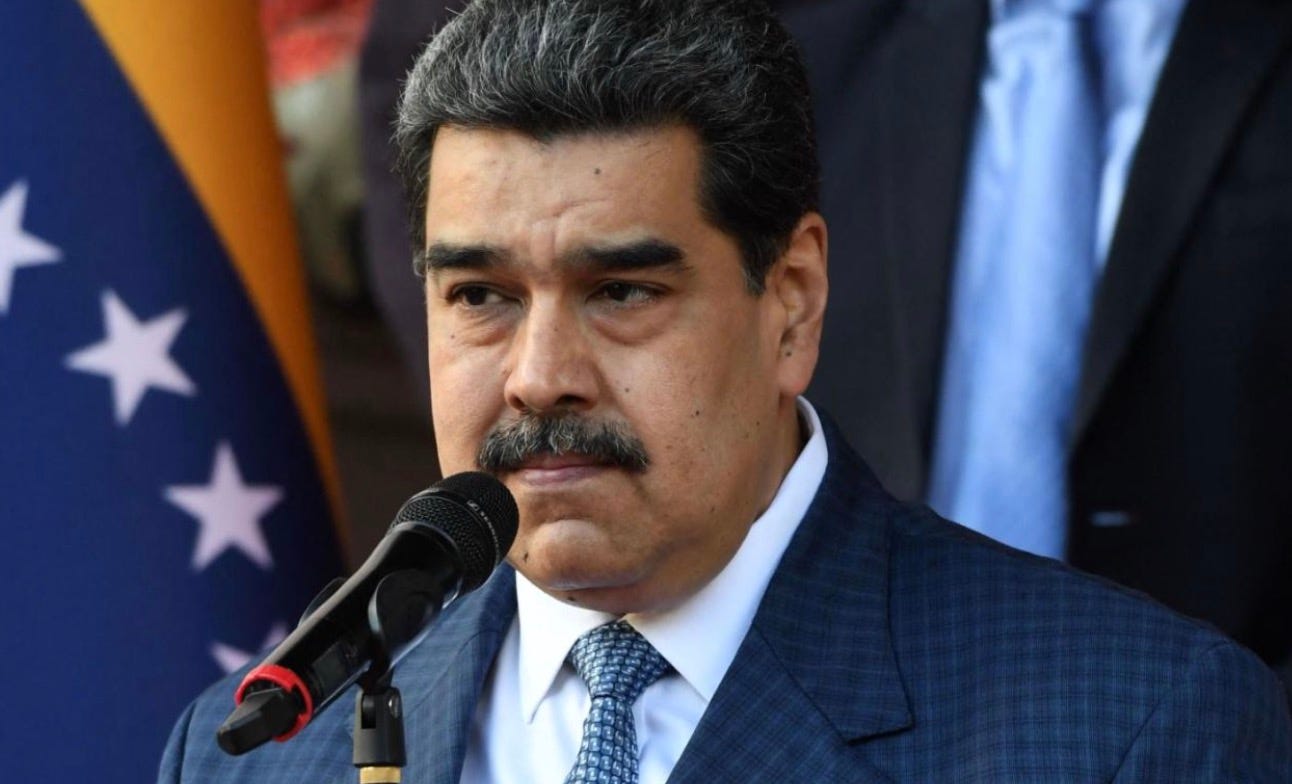
Democratic lawmakers, predictably, are calling the action unconstitutional and dangerous, arguing that sending Special Operations forces into another sovereign nation without Congressional approval risks pulling the U.S. into prolonged conflict.
Republican defenders are praising the move as a long-overdue strike against drug cartels and criminal networks that they say have operated with impunity for years.
Let’s not sugarcoat it: this is a notable escalation in U.S. foreign policy and arguably the most direct military intervention in Latin America since Panama in 1989. The fact that President Trump authorized this without a clear public mandate and framed it as part of a broader campaign against cartels and corruption, ensures that debate will rage for weeks. Whether one views the move as bold leadership to remove an ally of China and Russia, or reckless overreach, largely depends on political worldview, but markets do not trade on ideology.
They trade on risk, and overnight that risk level likely moved higher, albeit slightly. The Dow on Weekend Wall St. was only down -63 points on Saturday morning, hours after the news broke. Nothing calms markets like waking up to regime change before coffee, eh?
One of the most immediate pressure points to watch here is energy. No doubt someone from OPEC getting into his $500,000 Bentley overnight felt a great disturbance in the force. This operation, and Trump’s framing of it, reminds me of all those times during his 2016 campaign when he said “we should kept took the oil” when we went into the Middle East.
There’s no doubt in my mind that Trump is going to now try and “keep the oil” from Venezuela in one form or another.
Venezuela holds the largest proven oil reserves on the planet, even though years of mismanagement and sanctions have severely limited actual production. Any military action that threatens Venezuelan infrastructure, export routes, or regional stability could introduce a fresh geopolitical premium into oil prices. Even if Venezuelan crude is not currently a dominant contributor to global supply, perception alone can move markets. Energy traders care deeply about what could happen next, not just what is happening now, and uncertainty in an oil-rich nation tends to command attention very quickly.
This episode also does not exist in isolation. As I wrote heading into this year, the geopolitical picture has hardly cooled off as I expected it to in 2025. Tensions with Russia and China are still elevated, and now both countries have distanced themselves from Washington’s actions, with several regional leaders condemning the operation as a violation of sovereignty. According to Reuters, Brazil’s president said the U.S. had crossed an “unacceptable line” and urged the United Nations to intervene. These reactions matter because they feed directly into the broader process that is already underway: Russia and China reducing their dependence on the dollar and U.S. Treasuries as the core of the global financial system.
There are at least two realistic market scenarios that flow from here at first glance, but keep in mind I just had my first coffee of the morning, so bear with me.
