

By Andy Fischer, Mises Institute
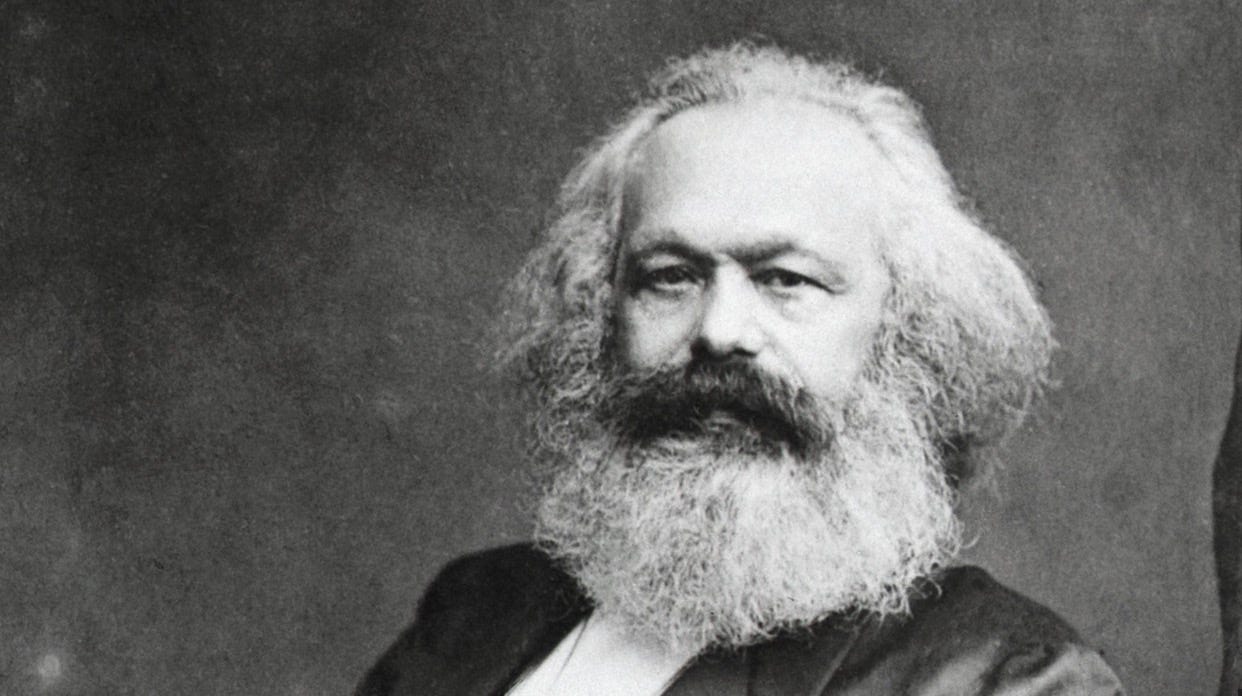
Karl Marx believed machines would eventually turn workers into something disposable. In The Communist Manifesto, Marx and Engels wrote that industrial labor had already reduced the worker to “a mere appendage of the machine.” In Capital, Marx argued that machinery would create a permanent “industrial reserve army” of unemployed workers. As automation increased, workers would lose bargaining power while capital consolidated control. The proletariat would become poorer and more desperate.
From that condition, Marx believed revolution would follow. That prediction sits at the center of his entire framework. But history moved in the opposite direction.
For more than two centuries, automation has not destroyed the value of labor; it has multiplied it. Machines allowed a single worker to produce far more than workers in earlier eras. Instead of becoming obsolete, workers became dramatically more productive.
The result was one of the largest expansions in prosperity the world has ever seen. Living standards rose, productivity soared, and workers did not become powerless appendages of machines, they became operators of increasingly powerful tools. In other words, Marx’s prediction about automation degrading labor has already failed. Interestingly, another economist anticipated something very different.
Nearly a century before Marx wrote Capital, Adam Smith described how tools and machines expand the productive power of labor. In The Wealth of Nations, Smith explained that improvements in machinery allow a single worker to accomplish the work that once required many. His famous example was the pin factory. A small group of workers using specialized tools could produce thousands of pins in a day. Without those tools, one worker might struggle to produce a few dozen. The machine did not replace the worker. It multiplied the worker’s output.
History has largely followed Smith’s model rather than Marx’s. Industrial machinery, electricity, computers, and the internet did not create a permanently-unemployed working class. They created a far more productive one. Each wave of technology expanded what individuals were capable of producing.
But artificial intelligence introduces something even more damaging to Marx’s theory. It breaks the sequence his entire argument depends on. Marx believed automation would attack the working class first. Machines would replace manual laborers and industrial workers. As those workers lost their economic value, a large population of displaced labor would form the revolutionary force that ultimately challenged capitalism. That ordering matters, in fact, it is key.
Marx’s theory depends on the proletariat being the first group pushed aside by machines. Artificial intelligence is unfolding in the opposite direction. AI is not primarily replacing manual labor, and it is not primarily replacing low-level workers performing routine tasks. The earliest disruption is appearing higher in the hierarchy.
AI systems are increasingly capable of performing work that once belonged to executives, strategists, consultants, and organizational leadership. The kinds of roles built around synthesizing information, forming strategy, writing plans, coordinating teams, and making high-level decisions—the work of the managerial and strategic class.
This is no longer hypothetical. Researchers have already begun testing this idea. In a recent experiment described in Harvard Business Review, researchers simulated a competitive corporate environment and asked human participants and an AI system to run a virtual company. The AI made strategic decisions about pricing, product design, and market positioning using the same information available to the human participants. In many cases, the AI outperformed the humans in profitability and strategic optimization.
Meanwhile, major technology companies are actively building autonomous AI agents designed to plan, act, and execute complex business tasks with minimal supervision. At the 2025 AWS re:Invent conference, Amazon introduced a new class of “frontier agents” capable of handling complex projects for hours or even days without human intervention.
These systems are part of a broader shift toward what researchers call “agentic AI”—autonomous software systems that can perceive environments, reason about goals, and take actions on behalf of humans.
The trend is clear. AI systems are moving beyond simple automation and into roles that involve planning, analysis, and decision-making across organizations. In other words, the machine is beginning to compress the very layer of society that traditionally sits above the worker. Meanwhile, the electrician still installs wiring, the plumber still fixes pipes, the mechanic still repairs engines. Physical skill in complex environments remains difficult to automate. This is the opposite of what Marx expected.
Marx believed machines would begin by replacing muscle. What we are seeing instead is machines beginning to replace structured thought at the mid-levels of organizations. That difference matters.
Marx’s framework assumes the proletariat becomes the first casualty of technological progress. Their displacement creates the shared economic pressure that fuels class conflict. The worker becomes the center of the political story because the worker is the first to be pushed aside. But if automation begins by compressing the managerial and strategic class instead, that dynamic breaks down. The first disruption is not happening at the bottom of the hierarchy. It is happening near the middle to the top.
And this problem does not stop with Marx. Many later thinkers built similar concerns about capitalism on the assumption that automation would primarily displace labor and gradually concentrate power away from workers. John Kenneth Galbraith argued that modern industrial systems would concentrate power in large corporate structures managed by technocratic elites. But artificial intelligence is beginning to automate the very managerial functions Galbraith believed would dominate the economy.
Herbert Marcuse offered a different warning. In One-Dimensional Man, he argued that technological society would trap individuals inside massive systems of industrial control.
Even more recently, economists like Paul Krugman have raised similar concerns about the long-term effects of technology on labor. Krugman has argued that technological change can weaken worker bargaining power and contribute to rising inequality, warning that automation may increasingly substitute for human labor in large portions of the economy. Artificial intelligence may push in the opposite direction.
By dramatically lowering the cost of analysis, coordination, and production, AI allows individuals to accomplish work that once required entire organizations. A single entrepreneur—equipped with powerful AI tools—can increasingly design products, analyze markets, write software, and operate businesses with very little institutional infrastructure. Instead of trapping individuals inside large systems, AI may empower far more people to build their own.
Across these different thinkers, one assumption remained remarkably consistent. Automation was supposed to threaten workers first. Artificial intelligence complicates that belief.
The first meaningful disruption is not appearing where Marx and many of his intellectual descendants expected it. It is appearing in the very layers of analysis, coordination, and strategy that once seemed immune to mechanization.
The machine was supposed to begin by replacing the worker. Artificial intelligence is beginning by replacing the people who sit near the middle and top of organizations, deciding what the workers should do. That reversal is not just a modification of Marx’s prediction. It is the final nail in the coffin.

QTR’s Disclaimer: Please read my full legal disclaimer on my About page here. This post represents my opinions only. In addition, please understand I am an idiot and often get things wrong and lose money. I may own or transact in any names mentioned in this piece at any time without warning. Contributor posts and aggregated posts have been hand selected by me, have not been fact checked and are the opinions of their authors. They are either submitted to QTR by their author, reprinted under a Creative Commons license with my best effort to uphold what the license asks, or with the permission of the author.
This is not a recommendation to buy or sell any stocks or securities, just my opinions. I often lose money on positions I trade/invest in. I may add any name mentioned in this article and sell any name mentioned in this piece at any time, without further warning. None of this is a solicitation to buy or sell securities. I may or may not own names I write about and are watching. Sometimes I’m bullish without owning things, sometimes I’m bearish and do own things. Just assume my positions could be exactly the opposite of what you think they are just in case. If I’m long I could quickly be short and vice versa. I won’t update my positions. All positions can change immediately as soon as I publish this, with or without notice and at any point I can be long, short or neutral on any position. You are on your own. Do not make decisions based on my blog. I exist on the fringe. If you see numbers and calculations of any sort, assume they are wrong and double check them. I failed Algebra in 8th grade and topped off my high school math accolades by getting a D- in remedial Calculus my senior year, before becoming an English major in college so I could bullshit my way through things easier.
The publisher does not guarantee the accuracy or completeness of the information provided in this page. These are not the opinions of any of my employers, partners, or associates. I did my best to be honest about my disclosures but can’t guarantee I am right; I write these posts after a couple beers sometimes. I edit after my posts are published because I’m impatient and lazy, so if you see a typo, check back in a half hour. Also, I just straight up get shit wrong a lot. I mention it twice because it’s that important.
the bulk of this essay is plain nonsense.
Yes, workers are more productive by virtue of the multiplication factor of automation.
Have they reaped the benefits of that increase? Or has it been harvested by the capital class?
Has workers tenure become more secure by virtue of their increased productivity? Or less secure?
I have no skin in the game of defending the working class, but I'm bound to observe the bulk of this essay is pure sophistry, intended to promote an agenda.
Digest and integrate at your own risk.
This author AGAIN gets the problem 100% wrong. AI is not destroying Marxism at all, it's a massive success for Marxism because it hugely damages society and vast swathes of workers (who are mistakenly labelled here as just manual workers). It moves power and wealth into the hands of the new elites, Democrat Communists.